)
)
We Keep Us Safe: The Puerto Rico Model for Proactive Community Survival Networks
In the mountain town of Mariana, 45-year-old Isabela Rivera [fictional character] watched her diabetic neighbor's insulin spoil in a powerless refrigerator within days of Hurricane Maria's landfall. Promises of federal aid came and went, and as one week became two, then three, then a month, Isabela and her neighbors realized a devastating truth: no one was coming to save them. They would have to save each other.
Within two weeks, Isabela and a dozen neighbors had organized a daily food distribution system, pooling resources and ensuring elderly residents received meals. A local mechanic jury-rigged a solar panel to power a community refrigerator for medications, and a teacher set up a radio hub using a car's battery and a ham radio. These were not trained responders—just ordinary people refusing to let their community fail while waiting for aid that arrived too slowly—or never at all.
This marked the birth of one of the 21st century’s most important lessons in disaster resilience: the Puerto Rico Model of community-led survival networks.
The Catastrophe: When Systems Collapse Completely
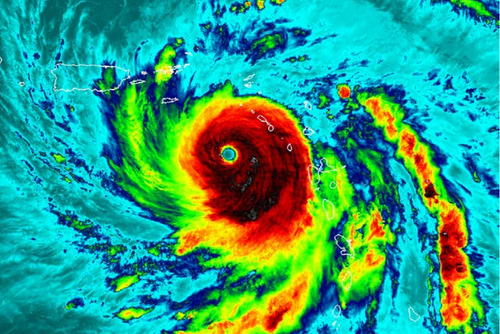
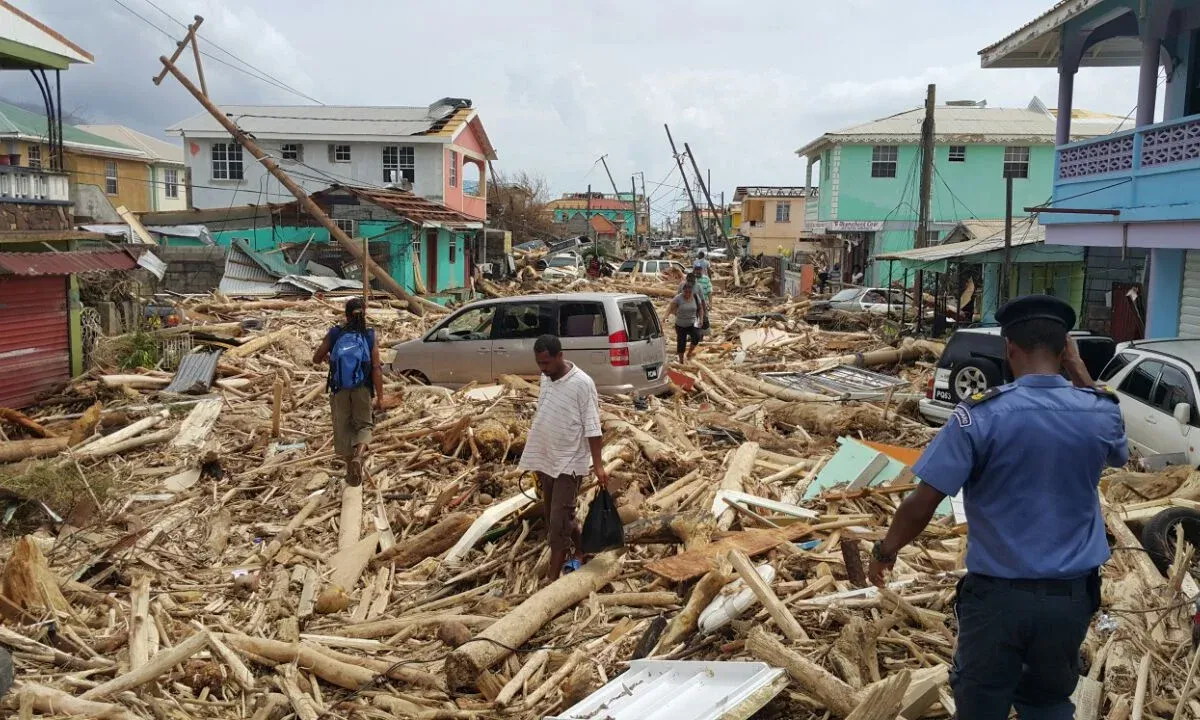
Hurricane Maria struck Puerto Rico in 2017 as a Category 5 storm[LK1] , but the true disaster unfolded afterward, as the complete collapse of power, water, healthcare, and communications exposed deep institutional failures. Slow and inadequate federal response, a bankrupt and fragile electric utility, and mismanaged recovery contracts left millions without basic services for months, turning the aftermath into a prolonged humanitarian crisis. Nearly 3,000 excess deaths—mostly from lack of electricity, clean water, medical care, and heat exposure—revealed that the catastrophe was not only natural, but systemic, highlighting the deadly fragility of centralized and poorly prepared disaster response systems.
Community-Led Response: Neighbors as First Responders
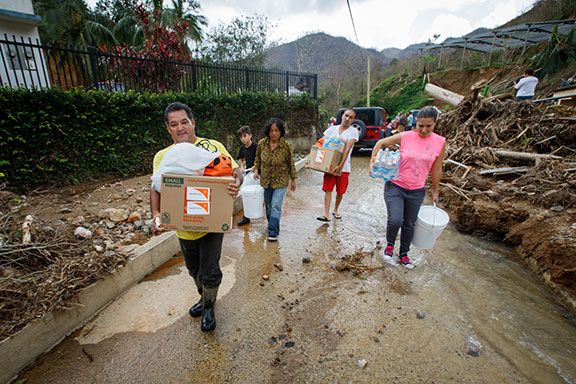
Into the leadership vacuum stepped ordinary Puerto Ricans, forming what researchers later recognized as one of the largest mutual aid networks in modern U.S. history, driven by community trust, volunteerism, and rapid grassroots coordination.

Brigada Solidaria del Oeste (Solidarity Brigade of the West) emerged within days in western Puerto Rico, setting up supply hubs, organizing food deliveries to remote mountain communities, and rebuilding communication using surviving technologies. Operating outside government systems, they relied entirely on donations and volunteer effort.
Casa Pueblo in Adjuntas—powered by solar energy since 1999—became a model of energy resilience when the grid collapsed. Its solar microgrid kept critical services running, supported medical refrigeration, enabled communications, and served as a coordination center, demonstrating the life-saving value of decentralized renewable power.
Comedores Sociales (Social Kitchens) spread across the island as residents pooled resources to feed those without electricity or cooking access. In San Juan’s Caño Martín Peña community, local groups served up to 2,000 meals daily for months, sustaining vulnerable populations through collective action.
Community Radio Networks filled the information gap when official channels failed. Stations like Radio Vieques broadcast emergency updates, connected isolated areas, and coordinated aid, becoming essential lifelines during the communication blackout.
Most strikingly, these efforts functioned without centralized command. Coordination happened through word-of-mouth, and community meetings—horizontal networks built on local knowledge, trust, and shared responsibility rather than formal authority.
Why Decentralized Networks Outperformed Institutions?
Post-Maria research helps explain why community-led networks consistently outperformed formal institutions.
Speed of response: Community networks mobilized within 24–48 hours, while official assistance in many areas took weeks to arrive [Journal of Emergency Management, 2019]. Deep local knowledge allowed organizers to immediately identify the most vulnerable—elderly residents, people with medical needs, and families with young children—without waiting for formal needs assessments.
Resource efficiency: Studies found that community-led distribution delivered aid with significantly less waste and overhead than centralized systems. Local organizers knew precisely which households needed support, what resources were required, and which routes were passable [Center for a New Economy, 2018].
Adaptive capacity: When supply chains broke down or needs shifted, community networks adapted almost instantly. Centralized systems were constrained by approvals and hierarchy, while community assemblies could pivot decisions in a single meeting [Disaster Medicine and Public Health Preparedness, 2020].
Social cohesion: Research from the University of Puerto Rico showed that communities with pre-existing social organizations and mutual aid traditions recovered faster and demonstrated stronger psychological resilience. Collective action reduced helplessness and built lasting social capital [International Journal of Disaster Risk Reduction, 2019].
Sustainability: Many initiatives established after Maria still operate today. Casa Pueblo has expanded solar microgrids across the island, and Comedores Sociales evolved into long-term food security programs—evidence that these efforts became permanent community infrastructure rather than temporary relief measures [Resilient Power Puerto Rico, 2020].
The Cost of Fragility and the Case for Community Resilience
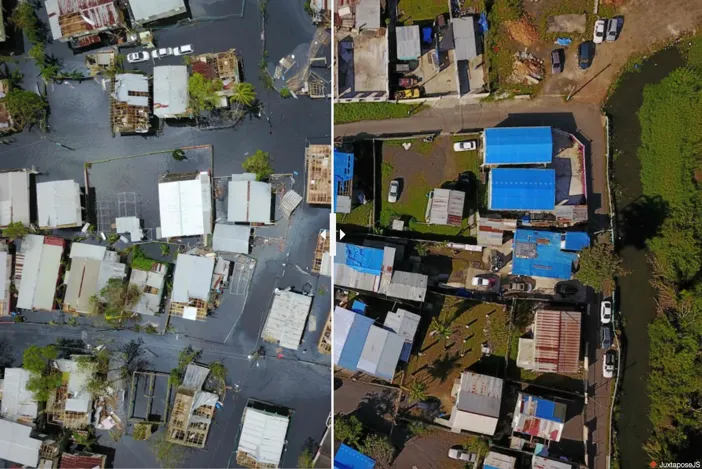
Hurricane Maria revealed the extreme cost of fragile, centralized systems. Economic losses reached nearly $90 billion, thousands of businesses closed, and Puerto Rico’s economy shrank by 6 percent within a year [National Oceanic and Atmospheric Administration, 2018; Puerto Rico Planning Board, 2019]. Institutional failures also destroyed public trust, with agencies such as FEMA suffering lasting legitimacy damage that reshaped migration, politics, and civic engagement [Pew Research Center, 2018]. Businesses reliant on centralized infrastructure and just-in-time supply chains failed, while those with decentralized operations, local sourcing, and backup power survived.
These outcomes point to a clear resilience model: preparation must happen before crisis. Permanent, neighborhood-scale community networks—supported by shared emergency supplies, independent energy and communication systems, mapped local skills, and regular training—provide the first line of response when formal systems falter. The goal is not to replace institutions but to create redundancy through legally supported, community-based resilience that protects lives, businesses, and social stability when centralized systems fail [American Journal of Public Health, 2019].
Resilience World Nexus summit: Moving from Spontaneous Response to Systematic Resilience
The RWN Summit will provide a critical opportunity to discuss how the lessons from Puerto Rico can be translated into practical, scalable resilience strategies. Decentralized, community-led systems proved faster, more adaptive, and more reliable than top-down responses, highlighting the need to intentionally design resilience rather than rely on improvisation during crises.
The summit will provide a floor for discussion on how leadership capability, crisis decision-making, coordination, and preparedness can be strengthened to resource, train, and legally empower neighborhood-scale mutual aid networks without undermining local autonomy. By linking real-world incidents to the knowledge shared at the event, participants will explore how organizations and communities can work in parallel—building redundancy, trust, and readiness—to manage similar risks more effectively before the next crisis occurs.
Conclusion: The Lesson Puerto Rico Taught the World
When asked if she would organize her community again, a local resident—who led a neighborhood food network after Hurricane Maria—answered simply: “We’re not waiting for another hurricane. We’re doing it now. When the next disaster comes, we won’t be starting from zero” [Oral History Archive, University of Puerto Rico, 2019]. Her words capture three core lesson of Puerto Rico:
- Community resilience: Grassroots networks proved critical communities that organized early did not wait for institutions and were able to respond immediately.
- Adaptive resilience: Puerto Rico showed resilience is about learning and evolving after crisis, not returning to a fragile pre-disaster normal.
- Layers of resilience: Lasting resilience is built bottom-up, from people to organizations to communities, ultimately shaping societal resilience.
[LK1]It hit land at category 5