)
)
)
The Update Apocalypse
The July 2024 CrowdStrike Falcon cybersecurity platform outage demonstrated how a single faulty software update can trigger global disruption, affecting around 8.5 million devices and critical services within airlines, healthcare, finance, and government, across the world. The incident exposed systemic risks from vendor dependency, testing andvalidation flaws, and tightly coupled technology ecosystems, highlighting that even cybersecurity tools can become points of failure. For organizations, the key lessons are clear: design resilience into digital infrastructure through staged testing, redundancy, vendor accountability, and robust failure simulations. Events like this underline the importance of proactive, layered resilience strategies and inter- and intra-organisational coordination– ensuring that a single failure does not escalate into a global operational crisis.
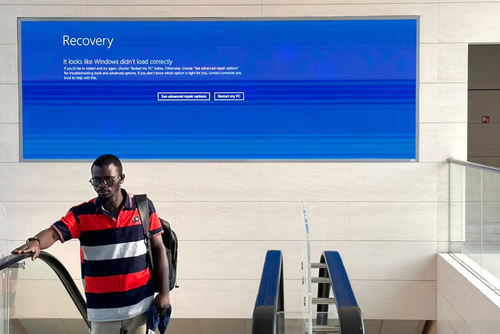
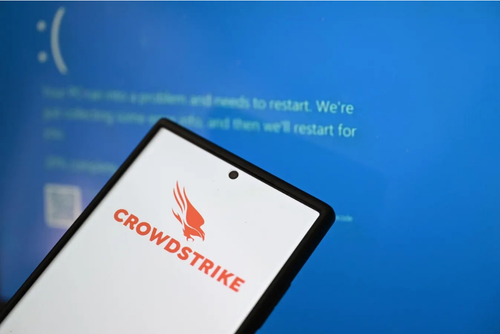
On the morning of July 19th in 2024, the cybersecurity firm CrowdStrike pushed out what should have been a routine update to its Falcon sensor – a security tool running on millions of business computers using Windows worldwide.The goal was to sharpen how the software detected suspicious activity, but a defect slipped through unnoticed. A hidden flaw in the way new data was validated made it past internal checks, and within moments, machines across the globe began to crash. The faulty CrowdStrike Falcon update caused affected Microsoft Windows devices to crash at the system-level, causing endless reboot loops. By the time the scale became clear, close to 8.5 million Windows machines had been hit, each one frozen, unusable, and waiting for manual recovery.
CrowdStrike identified the issue and rolled back the update in about 78 minutes, but the damage had already spreadfar beyond what a quick fix could contain. Recovery was slow and painful. IT teams and everyday users had to boot machines into recovery mode, hunt down the faulty file, and remove it manually one device at a time. For large organizations running thousands of endpoints, that meant hours, sometimes days, of hands-on work before normal operations could resume.

What started as a simple IT glitch quickly escalated into a global operational crisis, disrupting multiple critical sectors at once. Airlines faced widespread delays and cancellations as booking, baggage, and operational systems failed, whilehospitals and emergency services struggled with outages that affected patient care and response times. The Delta Air Lines CEO estimated a $500 million cost to the carrier1. Banks, government offices, and retail businesses were also heavily impacted, with payment systems, public services, and daily operations temporarily disrupted. At the time, insurers were estimating a $5.4 billion cost to US Fortune 500 companies2. The outage quickly demonstrated how a single system failure can quickly ripple across interconnected global infrastructure.
The dependency and reliance on few software platforms exposed organizations to:
- Productivity losses and shutdowns across industries, with an estimated range of between $400 million and $1.5 billion in insured losses globally.
- Reduced trust in centralized cybersecurity platforms, as software meant to protect systems became a major source of risk.
- Increased regulatory and legal scrutiny of software testing and update practices. A CrowdStrike shareholder lawsuit alleging inadequate testing and intent to defraud was later dismissed, showing the ongoing debate around accountability in software quality and resilience.
Broader Resilience and Risk Issues
This incident highlights a paradox of modern cyber defense – the same tools that strengthen security can become systemic risk points when they fail. Key risk insights include:
- Vendor dependency and limited operational control: Heavy vendor dependency increases systemic fragility, where one faulty update can affect multiple industries, while also reducing organizations’ ability toindependently validate, delay, or roll back changes, exposing them to operational blind spots.
- Patch management hazards: Automatic patching without proper staging can spread errors instantly instead of containing them.
- Testing and quality assurance gaps: Traditional testing frameworks may fail to simulate real- world interactions at scale, leaving edge cases unverified.
Lessons for Business Resilience and IT Strategy
For Chief Information Officers, Chief Risk Officers, and Chief Resilience Officers, the CrowdStrike outage is not justan IT issue – it is a clear example of how systemic risk can spread when technology is too tightly connected and poorly controlled.
- Test updates safely before wide release: Software updates should first be tested in a safe, isolatedenvironment and released to a small group of systems. This helps catch problems early before they can have widespread impacts.
- Have backups and manual options: Critical systems should always have alternative ways to operate. If automation fails, teams must be able to take manual control to keep essential services running.
- Choose vendors based on resilience, not just features: Organizations should assess software providers’capabilities in the face of crisis and define resilience requirements in service level agreements (SLAs), including rollback capabilities, staged update deployment, and guaranteed recovery times to limit the impact of faulty updates.
- Regularly test how systems behave under failure: Organizations should simulate failures and updates tosee how systems respond, instead of assuming everything will work during a real crisis.
This incident shows that resilience is not just about recovering from major disasters, but also about everyday systems and dependencies. It includes how we manage technology suppliers, software updates, and governance. It also highlights how failures in widely deployed software can create systemic risk, strengthening the case for regulatoryoversight of digital tools that support essential services, despite the complexity of implementing such measures.

The RWN Summit will provide a critical opportunity to examine how the lessons from the CrowdStrike global outagecan be translated into practical, scalable digital resilience strategies. The incident showed how tightly coupled technologies and centralized update mechanisms can trigger rapid, cross-sector disruption, reinforcing the need to design resilience into critical digital infrastructure rather than relying on post-incident fixes.
The summit will create a space to discuss how leadership, technology governance, crisis decision- making, and inter- and intra-organisational coordination can be strengthened to manage vendor dependency, update risk, and systemic digital exposure. By linking real-world technology failures to shared expertise, participants will explore howorganizations can build redundancy, control points, and recovery capability – reducing the likelihood that a single software failure escalates into a global operational crisis again.
Conclusion
The CrowdStrike outage serves as a powerful reminder that resilience is more than recovering from attacks – it isabout anticipating risks, designing systems to absorb failure, and ensuring continuity even when critical tools break. Organizations must think beyond disaster recovery, focusing on vendor management, robust testing, and layered safeguards to prevent a single point of failure from becoming a global crisis. Building this kind of resilience is no longer optional – it is essential for surviving in a hyper-connected, high-stakes digital world.
This article was authored by the Resilience World Nexus Summit (RWN) team.