)
)
Civil Unrest: Why do Gen Z Protests Matter to Organisations?
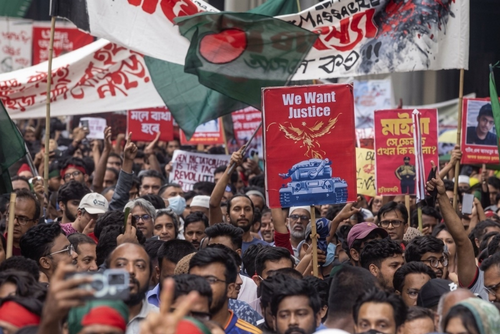
The Gen Z protests across Bangladesh, Kenya, Madagascar, Morocco, Nepal, Peru, Indonesia, and Serbia over the last two years have been heavily disruptive causing significant fatalities, property damage, and in some cases, fundamental political changes. In only 48 hours (08-09 September 2025), 73 people were killed, more than 1300 injured during protests in Nepal, which caused €18.2bn worth of damage, and led to the fall of the Communist government. For organizations with global operations, civil unrest has shifted from an occasional contingency to a regular planning consideration.
Strategic Challenge: The Spectrum of Civil Unrest
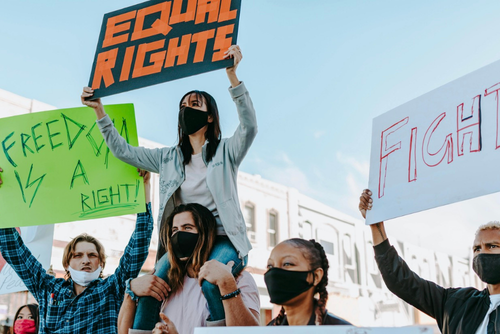
Civil unrest encompasses protests in the form of peaceful or violent demonstrations, strikes, and acts of civil disobedience. They are potentially triggered by a wide range of drivers: controversial laws, inflation, corruption, shortages, utilities outages, and governance failures. The same elements may trigger protests in one country but not in another, depending on local context, tolerance thresholds, and historical factors. Civil unrest can be unpredictable, but it can also be a rising tide that is utterly predictable. For example, Bangladesh is likely to see an increase in civil unrest in Q1 2026 due to the upcoming elections after the fall of the previous regime in August 2024.
While Gen Z has been the primary mobilizing force in recent global protests, actors vary and can include civil society organizations, political parties, labour unions, and activist networks. Identifying the actor type helps anticipate key elements such as potential for violence, likely turnout, duration, and security force response. For instance, union-led strikes typically follow announced schedules and defined routes, while decentralized youth movements may employ flash-mob tactics with minimal warning.
The sobering reality is that no country is immune to civil unrest, even where repressive regimes act as powerful deterrents. For organizations, the question is not whether civil unrest will occur in their operating environments, but whether they are prepared when it does.
Risk & Impact: Why Civil Unrest Matters to Organisations?
The risk of civil unrest can impact what matters most to a company: its People, Environment, Assets, Reputation, Legal exposure and Bottom line (PEARL$). Specific impacts include:
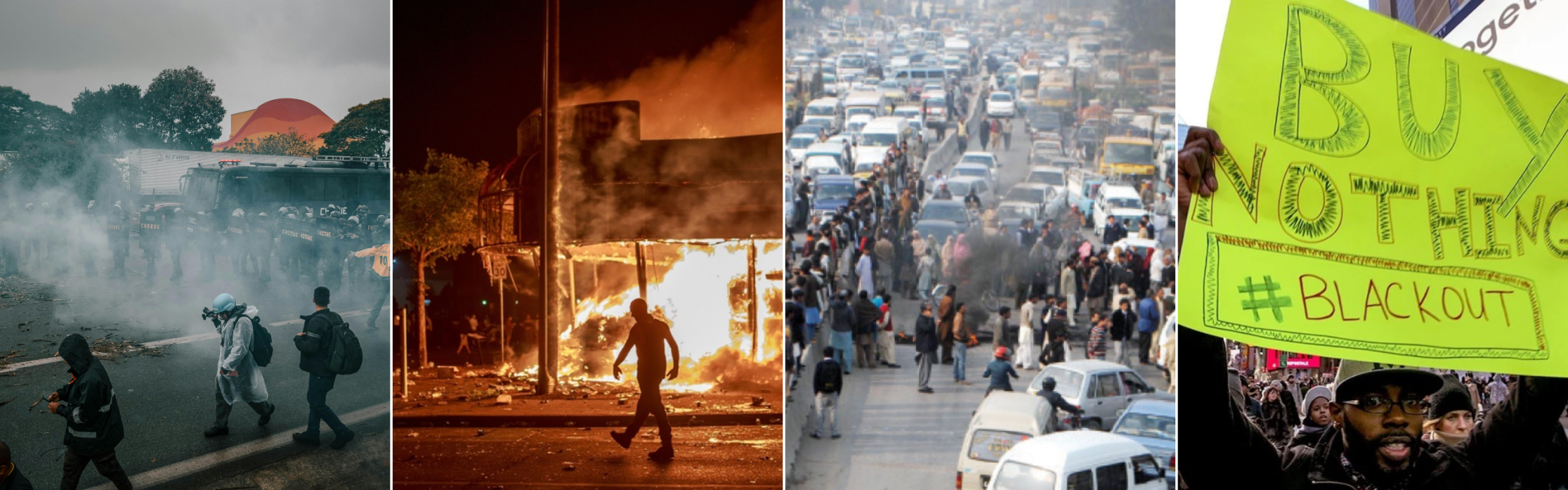
- Incidental harm to bystanders: The “wrong place, wrong time” scenario is common. Civil unrest is often marked by violent incidents from both protesters and security forces, including force abuse, use of tear gas, and detention of bystanders. Staff commuting through protest zones or residing near flashpoints face elevated security risks.
- Property damage: Assets located in the vicinity of protest flashpoints can be incidentally damaged through vandalism, arson, or clashes between protesters and security forces. Additionally, when security forces are overwhelmed, criminal actors often seize the opportunity to conduct looting, burglary, and other crimes targeting retail stores, industrial facilities, and high-value residences.
- Operational disruption: Traffic congestion caused by protests or road closures administered by authorities leads to staff absenteeism and supply chain disruption. These disruptions pose direct risks to business continuity and revenue.
- Reputational and legal exposure: Organizations perceived as aligned with unpopular policies or governments may become protest targets. Social media amplification of any organizational misstep—real or perceived—during unrest can lead to sustained boycotts, brand damage, and legal liability if employee security protocols prove inadequate.
Mitigations & Controls: Three Steps to Mitigate this External Risk
Companies cannot control the likelihood of civil unrest manifesting, as this is an external risk outside their sphere of influence. However, they can act before, during, and after incidents to reduce impact on their PEARL$.

- Understand Your Risk
- Assess current risk level: Evaluate the risk of civil unrest by analysing the social instability threat and past incidents in operating locations. Determine the likelihood of this risk to manifest and its impact on your company.
- Anticipate through intelligence: Leverage open-source intelligence on common drivers of discontent: food, energy, water security; controversial legislation; corruption, basic commodity shortages, and inflation. Balance risk drivers against mitigating factors such as historical security force response patterns, protest fatigue, and government actions like subsidies or policy reversals that may reduce tensions. Identify political, economic, or religious events (e.g., elections) that could set off an uptick in civil unrest.
- Develop a Trigger & Action Response Plan (TARP): Identify specific, clear, and objective elements that signal escalation and map corresponding actions for each alert level (e.g., physical security measures, communication protocols, business resilience measures).
- Assess current risk level: Evaluate the risk of civil unrest by analysing the social instability threat and past incidents in operating locations. Determine the likelihood of this risk to manifest and its impact on your company.

- Build Your Resilience
- Plan your business continuity:
- Document critical activities, their resource requirements, dependencies, contingencies, Recovery Time Objective (RTO) and Maximum Tolerable Period of Disruption (MTPD)
- Document the same elements for your critical suppliers
- Map protest flashpoints against your assets, key client locations, critical supplier facilities, and staff residences;
- Identify primary and alternative transportation routes;
- Establish clear decision-making processes and communication trees
- Train your teams: Conduct regular tabletop exercises based on realistic scenarios specific to your operating environment. Ensure teams understand activation protocols, communication channels, and individual responsibilities. Test your TARP triggers to identify gaps before they matter. Training builds muscle memory so teams respond effectively when crisis strikes.
- Plan your business continuity:

- Protect What Matters the Most When Civil Unrest Materializes
- Activate your crisis management response: Convene your Business Resilience Team, confirm the team coordinator and ensure all team members understand their roles and have redundant communication methods. Create an event log capturing all relevant developments with timestamps. Issue regular situation reports to leadership and affected teams. Integrate multiple intelligence sources: local media, social media monitoring, security service updates, and on-ground reports from staff.
- Activate Emergency Response protocols: Implement predetermined actions (e.g., site lockdown, supply chain rerouting, strengthening of physical security) from your TARP based on the current trigger level.
- Communicate clearly and regularly: Use multiple platforms to reach all key stakeholders (e.g., employees, contractors, suppliers) providing clear information, regular updates and actionable guidance (e.g., work-from-home arrangements)
- Monitor and adapt: Civil unrest evolves rapidly. Continuously reassess the situation and adjust your response accordingly. Be prepared for protests to shift locations, escalate unexpectedly, or persist longer than initially anticipated.
- Activate your crisis management response: Convene your Business Resilience Team, confirm the team coordinator and ensure all team members understand their roles and have redundant communication methods. Create an event log capturing all relevant developments with timestamps. Issue regular situation reports to leadership and affected teams. Integrate multiple intelligence sources: local media, social media monitoring, security service updates, and on-ground reports from staff.
How the RWN Summit Helps You Manage Civil Unrest Risk
The Resilience World Nexus (RWN) Summit provides key insights to manage the risk of civil unrest. By attending the RWN Summit you will gain access to:
- Practitioner-led expertise across all risks, including civil unrest, from Chief Resilience Officers, Chief Security Officers and risk leaders who have managed through Gen Z protests and political transitions;
- Closed-door focus sessions with dedicated masterclasses providing opportunities to deep dive into key elements (e.g., “Supply chain resilience”, “Pre-emptive analysis of risk manifestations”, “Workforce, personal and youth resilience”) that equip you to turn civil unrest risk into competitive advantage;
- Actionable frameworks you can implement immediately. For example, the session “Early warnings for all: what are the latest tools and techniques?” provides real-world solutions that to detect the early signs of increasing civil unrest risk.
Conclusion: Preparation Over Reaction
For organizations operating in today's environment, civil unrest represents a persistent and evolving risk. Gen Z's digital coordination capabilities, leaderless structures, and transnational solidarity patterns have created protest movements that are faster, less predictable, and more sustained than traditional demonstrations.
The question is not whether your organization will be directly or indirectly impacted by civil unrest, but whether you are prepared. Organizations that invest in understanding their risk exposure, building operational resilience, and preparing coordinated response protocols will protect their people, preserve business continuity, and safeguard reputation when unrest occurs.
Start by asking: Do we know our protest flashpoints? Can we operate if key routes are blocked? Can we account for all personnel during an incident? If the answers reveal gaps, close them now—before the next hashtag trends.
This article is part of the Human Threat Series prepared for the Resilience World Nexus 2026 Summit. For more information on building organisational resilience, visit https://www.rwnsummit.com/.
Rundown: Over the last two years, the risk of civil unrest has increased across the world marked by Gen Z deadly and disruptive protests from Bangladesh to Peru. For global organizations, civil unrest is no longer an occasional contingency but a regular operational risk that requires proactive planning.
Key Elements:
- Gen Z-led protests are increasingly disruptive, causing fatalities, property damage, and even toppling governments.
- The risk of civil unrest can impact a company's core interests, its People, Environment, Assets, Reputation, Legal exposure, and Bottom line (PEARL$).
- Organizations can't prevent unrest but can mitigate its impact through a three-step process: 1) Understand the risk via actionable intelligence and a Trigger & Action Response Plan (TARP), 2) Build operational resilience with business continuity planning and staff training, and 3) Protect their interests by activating crisis protocols, clear communication, and continuous monitoring when unrest occurs.
Why it matters: Gen Z's digital coordination and leaderless protest structures make modern civil unrest faster, less predictable, and more sustained than traditional demonstrations. The central question for organizations is no longer if they will be impacted, but whether they are prepared. Proactive investment in resilience is critical to protecting people, ensuring business continuity, and safeguarding reputation.